
Brazil's South Backs Green Hydrogen to Cut Fertilizer Reliance, Bolster Agribusiness
Rio Grande do Sul is spearheading projects to use green hydrogen to produce domestic green ammonia and urea, aiming for fertilizer independence and low-carbon grain exports.
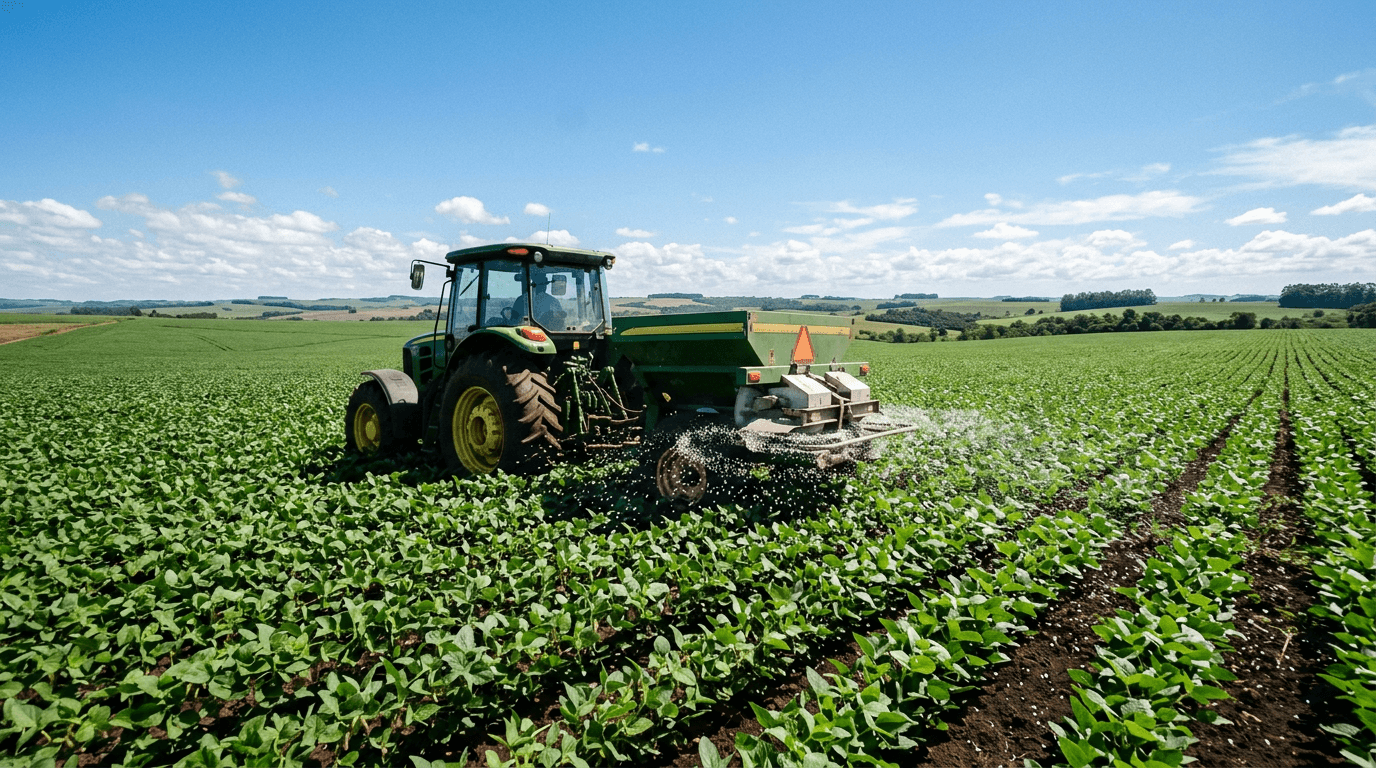
The state of Rio Grande do Sul, a critical node in Brazil's agricultural output, is executing a strategy to drastically cut its near-total reliance on imported nitrogen fertilizer by pivoting to domestic green hydrogen production. The move, centered on transforming renewable energy into green ammonia and urea—essential nitrogen inputs—signals Brazil's intention to improve farm-level economics and meet rising global demand for lower-carbon grain exports. Currently, the state imports about 90% of its nitrogen fertilizers, leaving its massive soybean and corn crops vulnerable to geopolitical shocks and the high cost of a U.S. dollar that today trades at R$5.1247.
To address this strategic vulnerability, the state government has partnered with multiple companies under its Green Hydrogen Production Chain Development Programme. One key initiative involves Begreen Bioenergia e Fertilizantes Sustentaveis SA, which has signed a memorandum of understanding (MoU) with the state to build three onsite green hydrogen and ammonia plants in the interior, with a preliminary license secured for a facility in Tio Hugo. These smaller, distributed projects, which also include sites in Passo Fundo and Condor, are planned to begin operations by 2027 and will have a combined capacity of 8,000 tonnes of ammonia per year. Furthermore, Infravix Engenharia is planning a larger-scale, $150 million investment at the Port of Rio Grande to produce 100,000 tonnes of urea annually, with production also slated to begin by the second half of 2027.
This shift leverages Brazil's vast renewable energy resources—its clean electric grid is a major advantage for producing green hydrogen (H2V), which is made by splitting water using renewable power. By manufacturing fertilizer inputs domestically, Brazil's agribusiness sector stands to gain from reduced logistics costs and a massive decrease in supply chain risk that was exposed during the 2022 global fertilizer crisis following Russia's invasion of Ukraine. The national import-to-consumption ratio for nitrogen-based fertilizers is already over 90%, making the success of these projects nationally consequential.
For farmers, the new supply promises cheaper inputs—fertilizers represent, on average, over 20% of the total cost for major crops like soybeans and corn—but also a critical commercial edge. Producing nitrogen fertilizers with green hydrogen avoids the significant carbon emissions of conventional production, which typically relies on natural gas. This creates a traceable, low-carbon product for major export markets like the European Union, positioning Brazilian grain to meet increasingly strict international certification standards.
The next major step for the program will be a technical and economic-financial capacity assessment of the approved projects by the state development bank, Badesul. Success in Rio Grande do Sul would validate a new model for supply chain autonomy, likely leading to similar green hydrogen projects across other major agricultural states in Brazil.
What it touches The development of domestic, low-carbon urea and ammonia production directly impacts the profitability and risk profile of the Fertilizer and Agricultural Input Sector, as well as Brazil's major commodity export markets, including corn and soybeans, which are sensitive to fertilizer supply and price stability. Reduced import costs and geopolitical risk could support margins for major agricultural producers and exporters.