
Brazil soybean crop faces early dry spell in Bahia agribusiness hub
A severe dry spell in Luís Eduardo Magalhães, Bahia, is threatening the start of Brazil's soybean planting season, raising crop-stress risks.
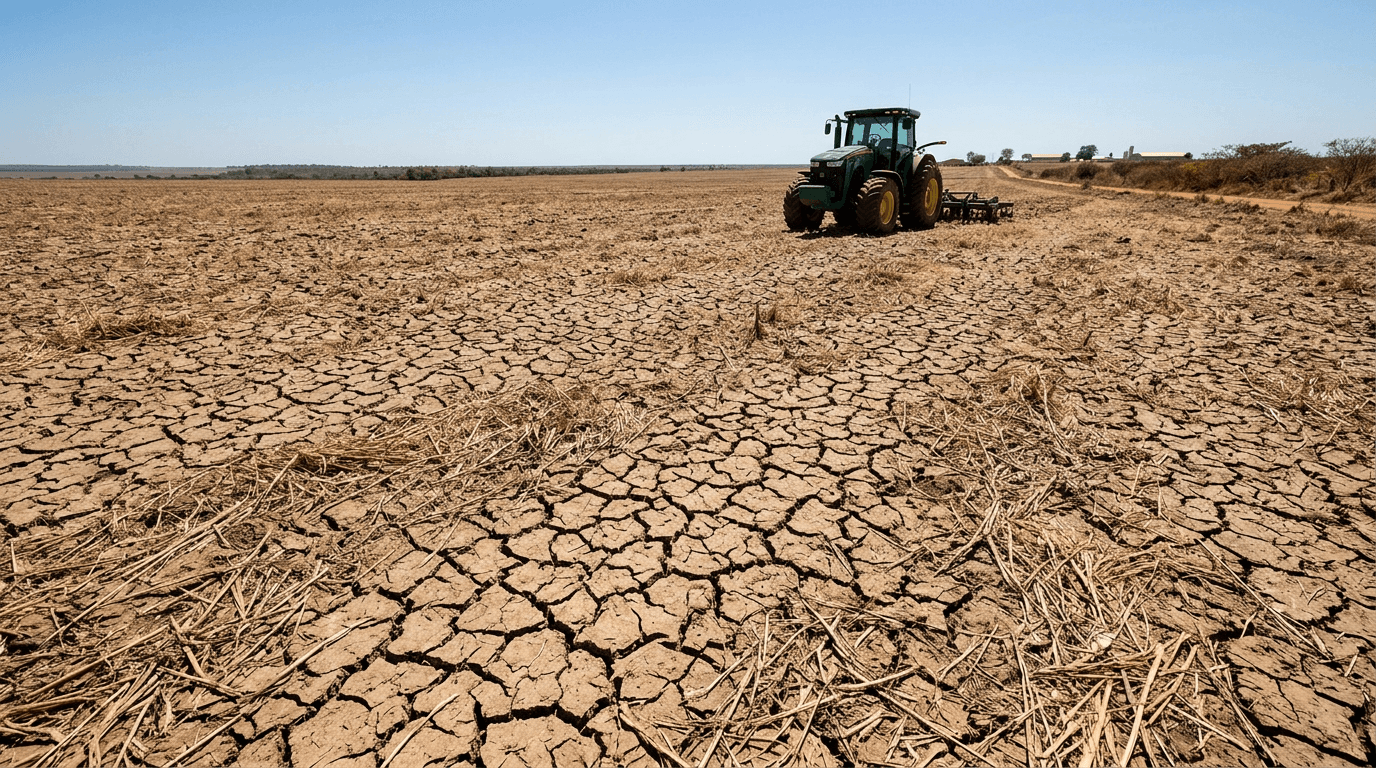
The start of Brazil’s highly anticipated 2026/27 soybean planting campaign is facing an early weather hurdle in the northeastern agricultural frontier. In Luís Eduardo Magalhães, a pivotal agribusiness hub in western Bahia, fields have recorded seven consecutive dry days with absolutely zero rainfall (0.0mm over the last week). This early-season water stress is raising concerns for local growers who rely on early spring rains to prime their soils before sowing the country's most valuable export commodity.
Luís Eduardo Magalhães, often called the "capital of agribusiness" in the region, lies at the heart of Matopiba—an acronym for the fast-growing agricultural frontier spanning the states of Maranhão, Tocantins, Piauí, and Bahia. Over the last few decades, this Cerrado savanna region has transformed from isolated pastures into a powerhouse for intensive global agriculture, drawing massive domestic and international investments. However, unlike southern Brazil, which is currently seeing abundant moisture, the northern and northeastern states are highly vulnerable to uneven rain distribution driven by lingering El Niño patterns, leaving local farmers highly dependent on the timely arrival of the wet season.
The dryness in Bahia stands in stark contrast to the heavy rainfall soaking southern fields. In Cascavel, located in the traditional southern grain state of Paraná, cumulative rainfall reached a drenching 160.1mm over the last seven days, with only three dry days. Meanwhile, other key central-western hubs are experiencing mixed conditions; Rio Verde in Goiás registered 24.2mm of rain over four dry days, while Sorriso in Mato Grosso—the heart of Brazil's soybean production—recorded a light 7.1mm with four dry days.
With Brazil's nationwide soybean planting officially starting in mid-September as government-mandated sanitary periods expire, the lack of moisture in the Northeast could delay the sowing calendar. Agricultural consultancies like StoneX have projected a potential record national harvest of 183.1 million tonnes for the 2026/27 season, but they warn that weather remains the decisive factor. If the dry spell in Bahia persists, it could compress the planting window, pushing the subsequent harvest deeper into next year and potentially disrupting the global supply chain, where Brazil stands as the primary exporter.
What it touches: The localized dry spell directly impacts the outlook for global soybean supply, keeping Chicago Board of Trade (CBOT) soybean futures sensitive to South American weather updates. On the financial side, the Brazilian real traded at 5.1247 per US dollar (+0.53%), a currency dynamic that heavily influences the export competitiveness and local currency pricing of Brazilian soybeans (CEPEA Paraná paper currently at R$152.1 per 60kg bag).