
Brazil’s BNDES Unlocks R$180 Million Green Finance for Amazon Restoration in Highly Deforested Pará Region
Brazil’s development bank announced R$180 million in financing for a 40-year concession to restore more than 10,000 hectares of degraded land in the Triunfo do Xingu region of Pará.
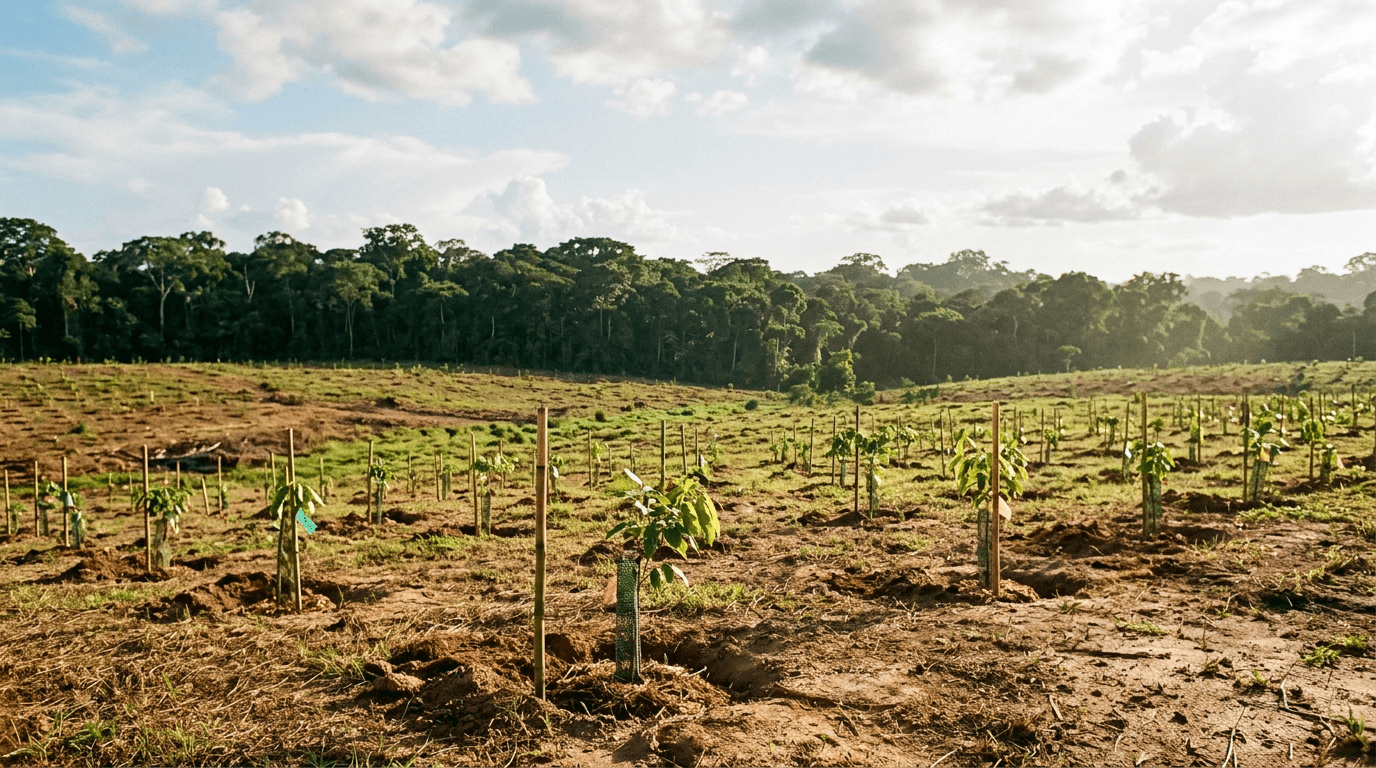
The National Bank for Economic and Social Development (BNDES) has announced R$180 million in financing from its dedicated Climate Fund to support a large-scale ecological restoration project in the state of Pará. The financing, which translates to approximately $35.4 million at the current exchange rate of R$5.085 per dollar, is earmarked for a 40-year concession to restore 10,346 hectares of degraded land within the critical Triunfo do Xingu Environmental Protection Area (APA). This investment provides a concrete mechanism for green finance, converting public funds into long-term environmental remediation in one of the Amazon’s most volatile regions.
The BNDES, Brazil’s powerful state development bank, is the manager of the Climate Fund, which utilizes repayable funds to finance projects that mitigate and adapt to climate change. This particular project is structured as a 40-year concession, utilizing a public-private model that grants the concessionaire the right to carry out restoration and sustainably manage the area for the duration. The mechanism is designed to attract private capital by creating a sustainable revenue stream derived from ecosystem services and forest products. Over the concession period, the initiative is estimated to remove 4.3 million tons of equivalent CO2, using native species and creating local jobs focused on the green economy.
The Triunfo do Xingu APA, located in Pará, has been a central focus of environmental concern due to decades of aggressive pressure from illegal mining, land grabbing, and cattle ranching. Created in 2006 to protect the region, the area has, counterintuitively, become a channel for deforestation, losing more than 40% of its primary forest cover between 2006 and 2023. This history highlights the significance of the BNDES investment, demonstrating an effort to use public financing to address chronic deforestation and shift land use away from destructive practices.
The BNDES funding signals the bank’s continued commitment to advancing Brazil’s environmental, social, and governance (ESG) targets and is part of a broader trend of leveraging the Climate Fund for Amazon restoration and agroforestry projects. By prioritizing the Triunfo do Xingu APA, the bank is channeling resources directly to a region where successful environmental recovery can have a material impact on reducing overall Amazon deforestation rates, a key goal for Brazil’s current administration. The next phase will involve monitoring the execution of the restoration plan and its success in strengthening the local bioeconomy around the use of sustainably harvested native species.