
Dry Spell Halts Soybean Planting in Brazil’s Center-West as El Niño Brings Hot, Dry Start
Key areas of Brazil's soybean belt are facing a dry spell as the 2026/27 planting season begins, raising crop-stress risk for the world’s largest producer.
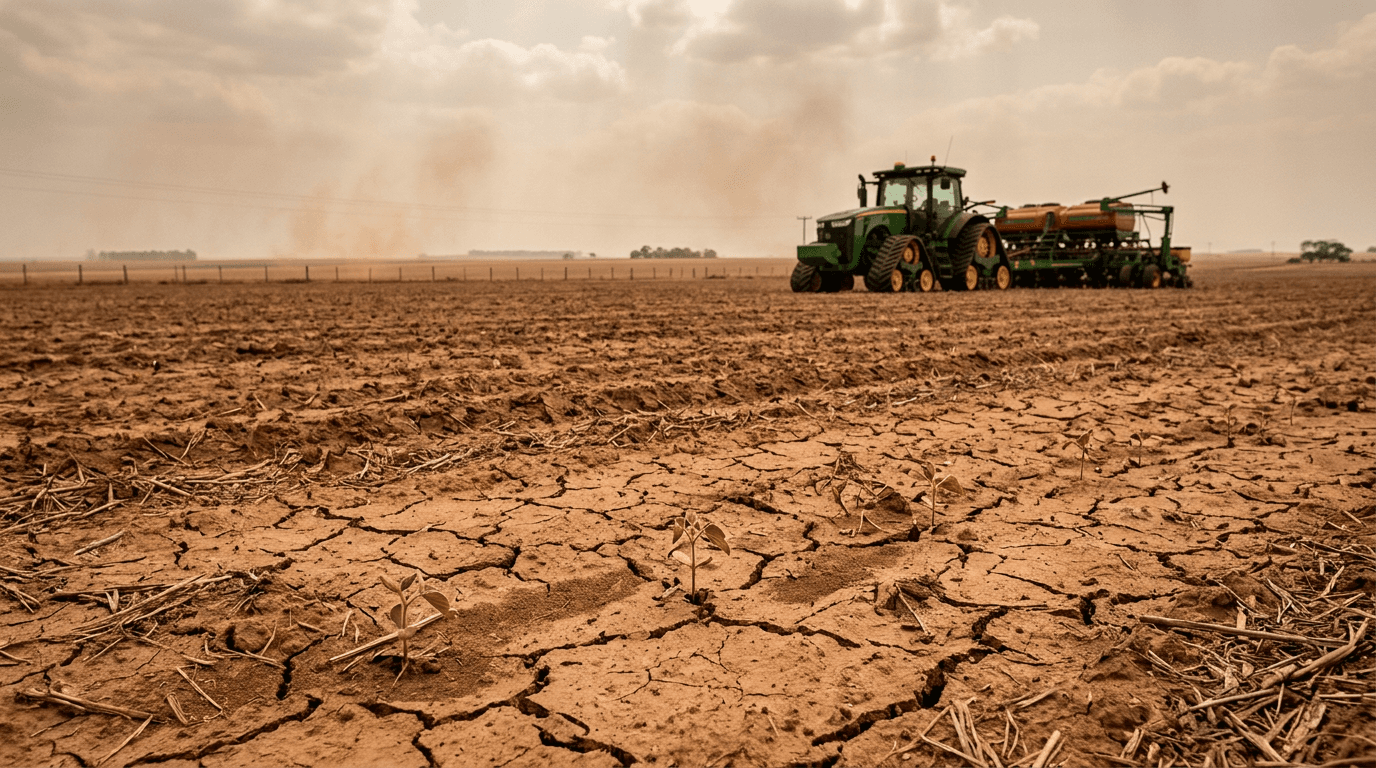
The start of Brazil’s 2026/27 soybean planting season is being hampered by an early dry spell across key production areas in the Center-West and Northeast, with the lack of consistent rainfall forcing many farmers to delay fieldwork. The city of Luís Eduardo Magalhães in Bahia state, a critical part of the new agricultural frontier known as MATOPIBA, recorded just 0.3 millimeters of rain over the last seven days, enduring seven consecutive dry days as of today. Similar concerns are rising in Mato Grosso, the country’s largest producing state, where Sorriso has seen only 9.4mm of rain over the past week, following five dry days.
The current planting window—September through November—is critical for the nation that is the world’s largest supplier of the oilseed, and the water deficit is a significant concern for the global commodity market. The lack of moisture is especially troubling because it coincides with the traditional start of the safra, or crop season, which typically ramps up in October. Initial planting that occurred after brief early rains is now at risk of water stress, while many other producers in states like Goiás, where Rio Verde has logged five dry days, are holding back from sowing until the season's rains become more consistent. This pattern mirrors a forecast by consulting firms that a strengthening El Niño climate pattern would bring drier, hotter conditions to Central Brazil.
The dry start presents an immediate risk by delaying the crucial main planting period. While soybeans planted now are in the early vegetative stage, which is relatively resilient, prolonged dryness will push the bulk of the planting into a narrower window, increasing the risk of adverse weather later in the growing cycle, particularly during the vulnerable flowering and pod-filling stages. Water deficit is historically the primary cause of major soybean yield losses in the country. The 2026/27 harvest is currently forecast to set a new production record, but analysts caution that weather conditions will be the decisive factor.
Farmers across the country are closely monitoring weather models, hoping for the return of heavier, sustained rains in October to allow for the widespread resumption of planting. The need for consistent moisture is paramount for establishing a healthy crop and keeping Brazil on track to meet global demand for its soybean exports, a key component in livestock feed and edible oils worldwide.
What it touches The delay and potential for crop stress in Brazil, the world's largest soybean supplier, provides support for international soybean prices, which closed at 1309.75 cents per bushel today. The outlook for Brazil's massive commodity exports also impacts the country's currency, with the US Dollar closing at R$5.1247 today.