
Dry Start to Planting Season Puts Stress on Brazil's Record Soybean Crop Outlook
Key agricultural hubs in Mato Grosso and Bahia, including Sorriso and Luís Eduardo Magalhães, face a severe dry spell as the soybean planting season begins.
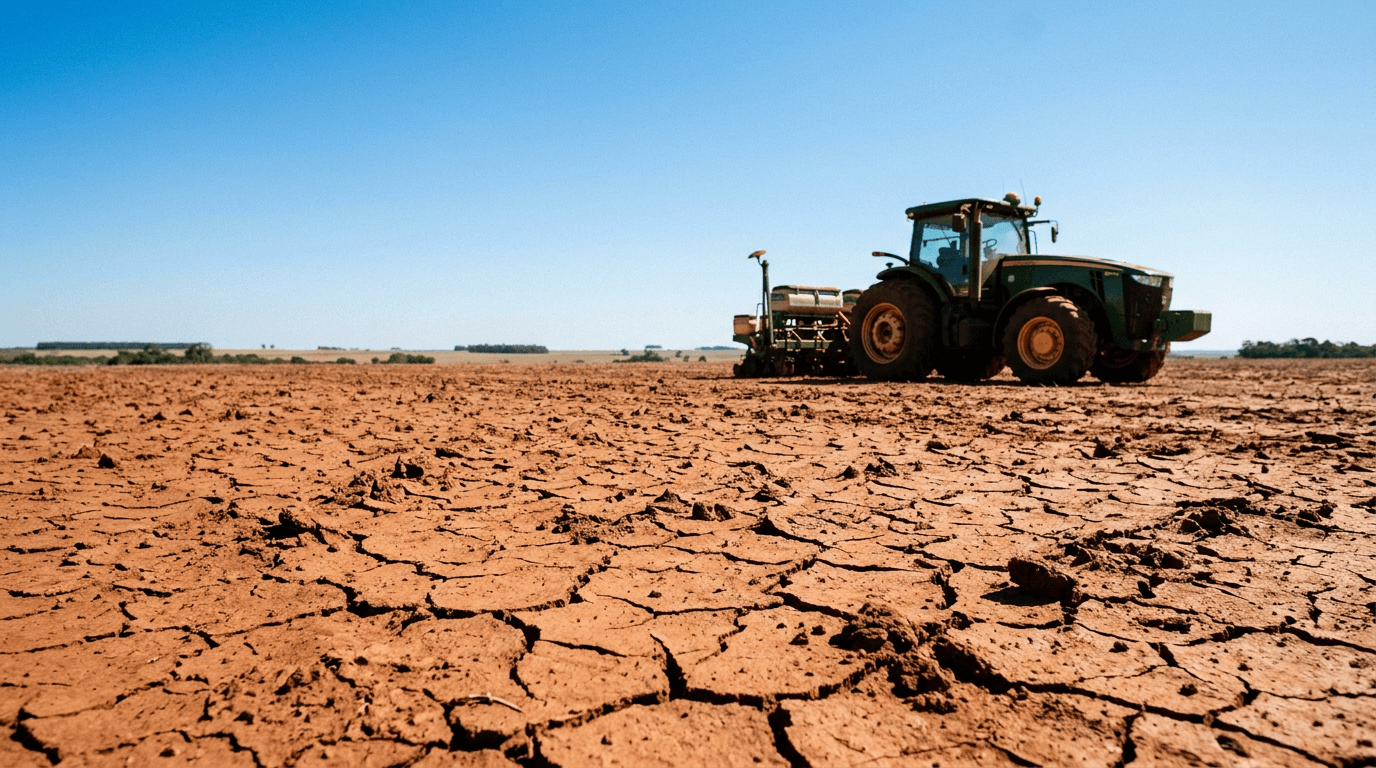
The official start of Brazil’s soybean planting season is underway in the country’s agricultural heartland, but a significant lack of rain across key regions is raising the risk of crop stress and planting delays for the world’s largest producer. In Luís Eduardo Magalhães, a major agribusiness center in Bahia, the last week has seen virtually no rain, reporting 0.0mm over seven consecutive dry days as of today. Meanwhile, in Sorriso, Mato Grosso, widely known as the national "soybean capital," the last week recorded only 17.9mm of precipitation and six dry days, insufficient to guarantee the consistent soil moisture needed for newly sown seeds.
The dry conditions are critically timed for farmers across the vast Cerrado savanna, who are now legally permitted to begin sowing the 2026/2027 soybean crop. Mato Grosso—the nation’s single largest producing state—begins its planting window in early September, and farmers rely on the summer rains to "charge" the soil with water before putting expensive seeds into the ground. Luís Eduardo Magalhães is an equally crucial hub, sometimes called the "Wall Street of soybeans," and its ability to plant early and efficiently is central to Brazil’s total output. The current lack of moisture in both areas forces farmers to choose between risking planting, which can lead to poor emergence and expensive replanting, or delaying the operation, which compresses the entire agricultural calendar.
Planting delays in the soybean crop create a cascading consequence for the country’s overall food supply. A later soybean harvest pushes back the window for planting the crucial second-crop corn, known as safrinha, which accounts for the majority of Brazil's total corn production. Placing the safrinha outside its ideal growing window exposes it to greater weather risks, threatening to tighten the global supply of both major commodities. Brazilian farmers are now closely watching long-term forecasts, hoping for the onset of consistent, heavy rainfall to allow the brazil soybean crop to proceed without further delay.
This latest weather concern comes as brazil soybean production continues to expand its global dominance, with the country being the leading supplier to key markets like China. Any threat to the harvest is felt immediately in global commodity markets, even for an expected record crop. The risk of delayed planting helped lift the Chicago Board of Trade (CBOT) soybean futures price to 1316.75 cents per bushel today, a gain of 0.53% on the day.
WHAT IT TOUCHES: The immediate supply risk in the world’s largest soybean exporter has been noted in commodity markets, with soybean futures prices ticking higher. The Brazilian real, which often tracks the country’s robust agricultural exports, closed the day at 5.085 Real per U.S. Dollar (USD/BRL), an appreciation of 0.80%.