
Brazil’s Tax Overhaul Enters ‘Test Year,’ Cutting Legal Risk for Foreign Investment
Brazil’s new Dual Value Added Tax (VAT) system begins its critical 2026 test phase, promising to simplify a tax code once ranked among the world’s worst.
Brazil’s multi-decade effort to simplify its notoriously complex tax code entered a critical new phase this year, as the country’s new Dual Value Added Tax (VAT) system began its "test year." The ambitious reform is designed to fundamentally change how businesses operate and is expected to significantly reduce the legal and compliance risks that have historically deterred long-term foreign investment (FDI). The prior system was globally recognized for its inefficiency, with the World Bank’s Doing Business report previously ranking Brazil 184th out of 190 countries for its "Paying Taxes" indicator.
The new structure replaces five existing taxes—PIS, Cofins, IPI, ICMS, and ISS—with two new levies: the federal Contribution on Goods and Services (CBS) and the state and municipal Tax on Goods and Services (IBS). This Dual VAT aims to eliminate the tax-on-tax effect known as cumulativeness and allow for the full, immediate utilization of fiscal credits, bringing Brazil's consumption tax system in line with standard models used by the Organisation for Economic Co-operation and Development (OECD) member states. This shift is a direct response to a tax environment where companies were estimated to spend an average of 1,501 hours per year on compliance, stifling productivity and increasing operating costs for all businesses, domestic and foreign alike.
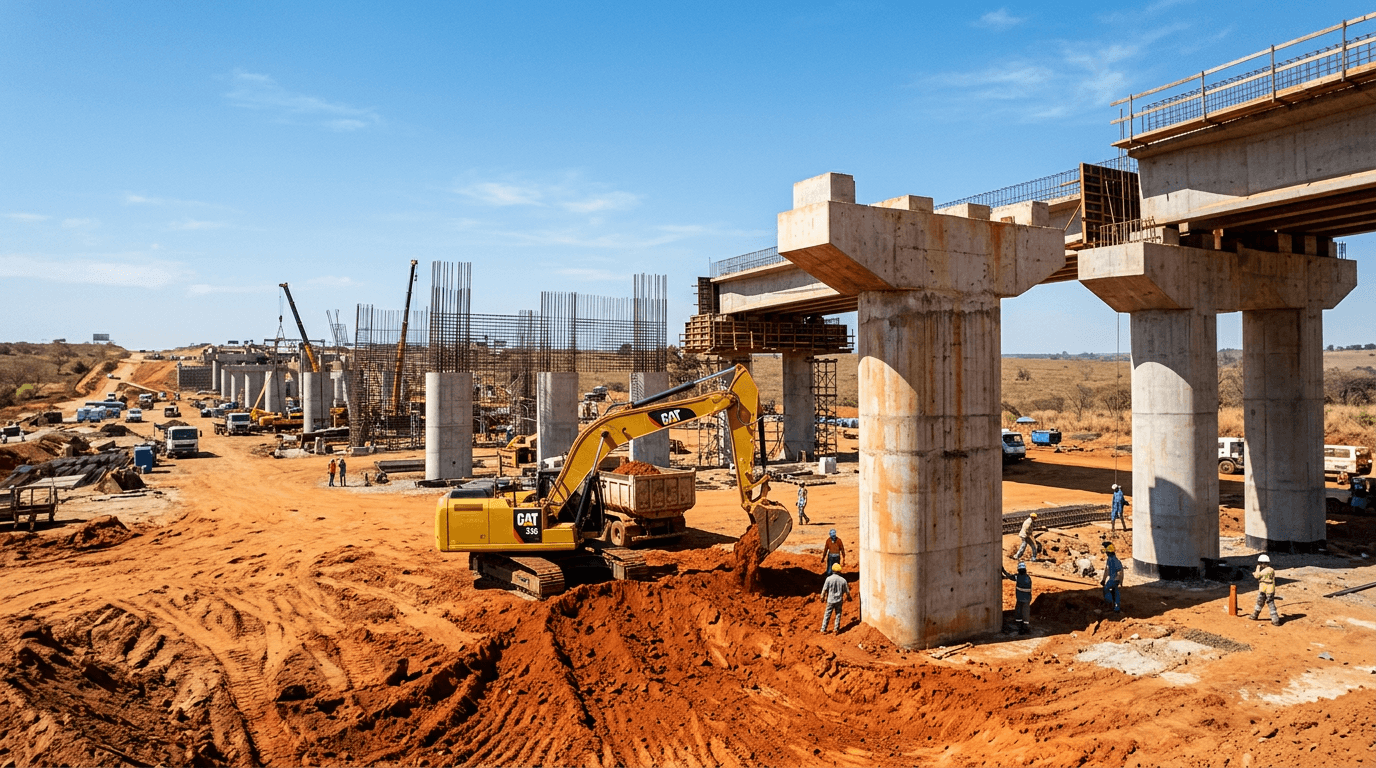
For foreign investors, particularly those in capital-intensive, long-term projects like infrastructure and energy, the reduced legal uncertainty is the most important benefit. The reform provides a mechanism for the economic re-balancing of administrative contracts due to tax changes, essentially "de-risking" major contracts that span years or decades by providing a formal method to adjust public-sector agreements when the underlying tax burden changes. Coupled with the elimination of cascading taxes and the improved transparency of VAT credits, this structural change removes a significant barrier to the predictability required for large-scale Foreign Direct Investment.
The 2026 period is serving as a crucial proving ground for the system's operational readiness. During this test phase, the CBS and IBS are levied at a combined symbolic rate of 1% (0.9% CBS and 0.1% IBS), which does not represent a financial tax increase as it is offset against existing taxes. However, the implementation is real: businesses have faced hard deadlines since August 2026 to ensure their electronic fiscal documents are correctly reporting the new tax fields, with penalties now enforceable for non-compliance. The multi-year transition accelerates sharply on January 1, 2027, when the federal taxes PIS and Cofins are formally extinguished, and the new CBS takes full effect, kicking off a phase-in process that will see the old system fully abolished only by 2033.
What it touches The simplification and reduction of legal risk are direct positive developments for sectors reliant on long-term contracts and significant upfront capital expenditure. This includes Brazil’s infrastructure and energy sectors, as well as capital-intensive industries that have struggled under the prior, complex tax credit regime. The overall improved predictability is seen as a driver for increased Foreign Direct Investment (FDI) into the Brazilian economy.