
Brazil passes Redata tax exemption to spark AI data center boom
Brazil's Senate has approved the Redata bill, slashing import and manufacturing duties to position the country as Latin America's primary green AI hub.
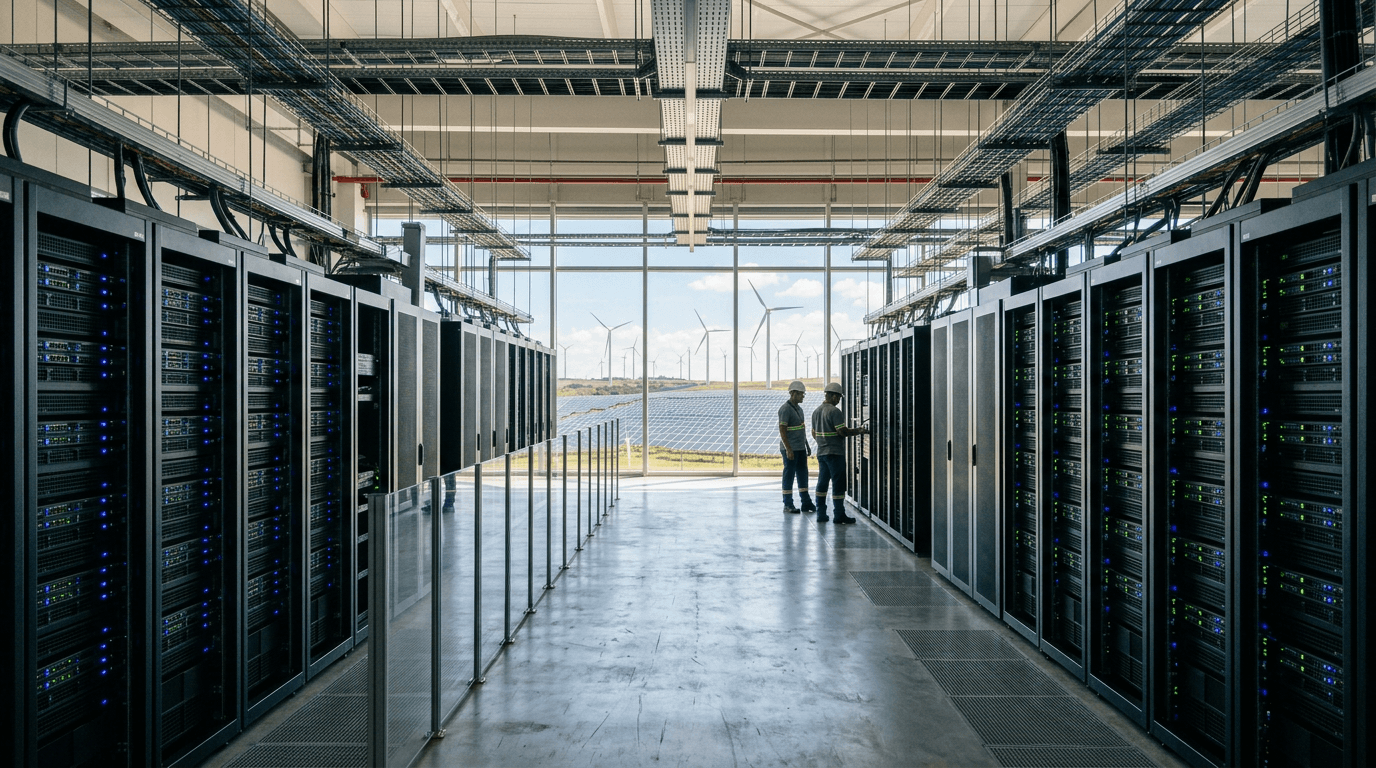
In a major bid to dominate the Latin American digital economy, Brazil’s Senate passed the Redata bill (PL 278/2026) on September 1, 2026, sending the landmark legislation to President Luiz Inácio Lula da Silva for his final sanction. The newly approved federal tax regime, known as the Regime Especial de Tributação para Serviços de Datacenter, suspends and zeroes heavy federal taxes—including the Import Tax, IPI, PIS, and Cofins—on critical information and communication technology equipment. By slashing these steep import and manufacturing duties for five years, Brazil aims to lower high upfront capital barriers and position itself as the region's premier hub for artificial intelligence and cloud computing infrastructure.
The fiscal incentive is substantial, representing an estimated tax relief of R$ 5.2 billion ($1.02 billion) in 2026 alone. However, the Redata program is designed as an industrial-policy package rather than a simple tax holiday. To qualify for the exemptions, data center operators must meet strict operational and environmental benchmarks. Facilities must source 100% of their electricity from renewable or low-emission energy, such as solar, wind, or hydropower. They must also adhere to a stringent water-cooling efficiency standard of no more than 0.05 liters of water per kilowatt-hour, publish regular sustainability reports, and reinvest 2% of their subsidized equipment value into domestic research and development. Furthermore, operators are required to reserve at least 10% of their processing capacity for the Brazilian domestic market.
This policy leverages Brazil's unique geographical and environmental advantages. Unlike the United States or Europe, where power grids are increasingly strained by the massive energy demands of AI, Brazil boasts an electricity matrix that is already over 80% renewable. Tech giants and hyperscalers looking to decarbonize their supply chains have struggled with high local taxes when importing servers and advanced cooling systems into Brazil. By removing these fiscal bottlenecks, the government hopes to repatriate data processing; currently, an estimated 60% of Brazil’s data and artificial intelligence workloads are processed abroad.
While the bill passed the Senate with broad support, it also highlights the strategic choices facing the country as it approaches its next major political cycle. The tax exemptions are front-loaded for 2026, with the projected fiscal cost dropping to R$ 1 billion in subsequent years as Brazil transitions into a broader consumption tax reform. For foreign observers, the mechanism of Redata shows a coordinated effort by the Lula administration and Congress to use green industrial policy to attract foreign direct investment. However, the influx of power-hungry data centers will test the capacity of Brazil’s national electricity grid and transmission planning, shifting the focus from tax relief to physical infrastructure readiness.
What it touches: The implementation of Redata directly benefits multinational technology firms expanding their cloud and AI infrastructure in Latin America, most notably Amazon (AMZN), which operates extensive Amazon Web Services (AWS) infrastructure in the region. The policy also boosts local digital infrastructure operators, such as Scala Data Centers and Elea Data Centers, alongside domestic renewable energy providers supplying the free power market.