
Brazil today: Supreme Court feud and gang defiance shake 2026 race
A widening Supreme Court feud over the Banco Master scandal and a presidential candidate defying a gang campaign ban are reshaping Brazil's political landscape.
A dramatic convergence of judicial warfare and campaign-trail defiance has laid bare the deep institutional and security challenges shaping the Brazil today. What began as a financial fraud investigation has rapidly spiraled into a full-blown constitutional crisis, while on the streets, the country’s powerful drug factions are actively attempting to dictate the terms of the upcoming October presidential election. For international observers trying to make sense of the daily headlines, the events of the last 24 hours reveal a political landscape where institutional boundaries are being tested like never before.
At the center of the storm is a bitter, public feud at the very top of the Brazilian judiciary. Supreme Court Justice Alexandre de Moraes—nationally famous for his aggressive prosecution of former President Jair Bolsonaro—is facing intense pressure to resign. The crisis escalated dramatically after fellow Justice André Mendonça unsealed federal police documents linking de Moraes to Daniel Vorcaro, the disgraced owner of the collapsed Banco Master. The unsealed files revealed intercepted messages of Vorcaro seeking advice from de Moraes, alongside a controversial 130 million reais ($25 million) legal contract between the bank and a law firm run by de Moraes’s wife. With de Moraes demanding Mendonça be investigated for releasing the files, and Mendonça pushing for de Moraes's suspension, the Supreme Court has plunged into an unprecedented internal war that is set to be arbitrated by the court’s full plenary.
This judicial turmoil is directly upending the 2026 presidential race. The Banco Master scandal has heavily damaged the campaign of opposition Senator Flávio Bolsonaro, who was implicated in receiving bank funds. This has allowed incumbent President Luiz Inácio Lula da Silva to open a wider lead in recent polls. However, the crisis is also fueling public outrage over corruption and judicial overreach, making institutional reform a central demand for voters. With Congress deferring key labor and security reforms until after the vote, the election has effectively frozen major legislative progress while amplifying political risk.
Meanwhile, the reality of Brazil’s public security crisis spilled directly onto the campaign trail this weekend. In the northeastern agribusiness hub of Fortaleza, right-wing presidential candidate Renan Santos wore a bulletproof vest to lead a campaign rally in the Vicente Pinzón neighborhood, openly defying a ban on political activity imposed by the Red Command (Comando Vermelho), one of Brazil’s most powerful drug trafficking organizations. Speaking through a megaphone, Santos declared "total war" on organized crime, highlighting how territorial control by drug factions remains a premier concern for voters alongside corruption.
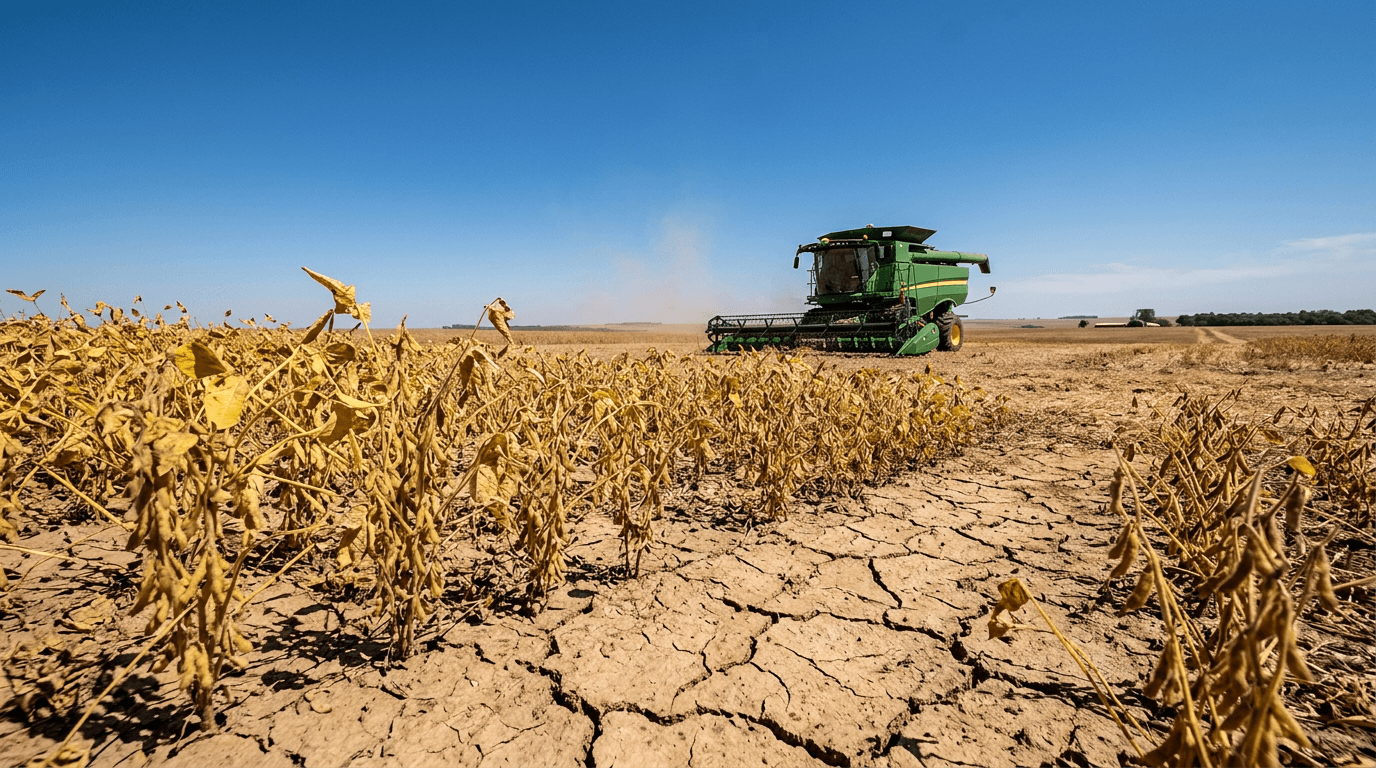
Beyond the political theater, the Brazil economy is facing structural shifts and environmental headwinds. In the agricultural sector, speculators are piling into soybean bets as an early dry spell threatens crops in the key farming state of Bahia. Simultaneously, geopolitical alignments are shifting; USA Rare Earth recently completed its $2.8 billion merger with Brazil's Serra Verde. Operating in Goiás, Serra Verde is the only scaled producer of critical heavy rare earth elements outside of Asia, making the combined company a major Western competitor to China’s monopoly on materials vital for electric vehicles and defense systems.
What it touches: The deepening political risk directly exposes Brazilian sovereign debt and the Brazilian real (BRL) to heightened volatility as the institutional feud threatens judicial stability. In the commodities space, the dry spell in Bahia is keeping international soybean futures highly sensitive to Brazilian weather updates. Meanwhile, the successful completion of the Serra Verde merger highlights growing foreign strategic interest in Brazil's mining sector, directly positioning Nasdaq-listed USA Rare Earth (USAR) as a key vehicle for Western critical mineral supply chains.