
Political and Environmental Risks Loom Over $15.9 Billion Petrobras Asset in Foz do Amazonas
Scotiabank estimates that exploration in the environmentally sensitive Foz do Amazonas basin is critical to 14% of Petrobras’s value.
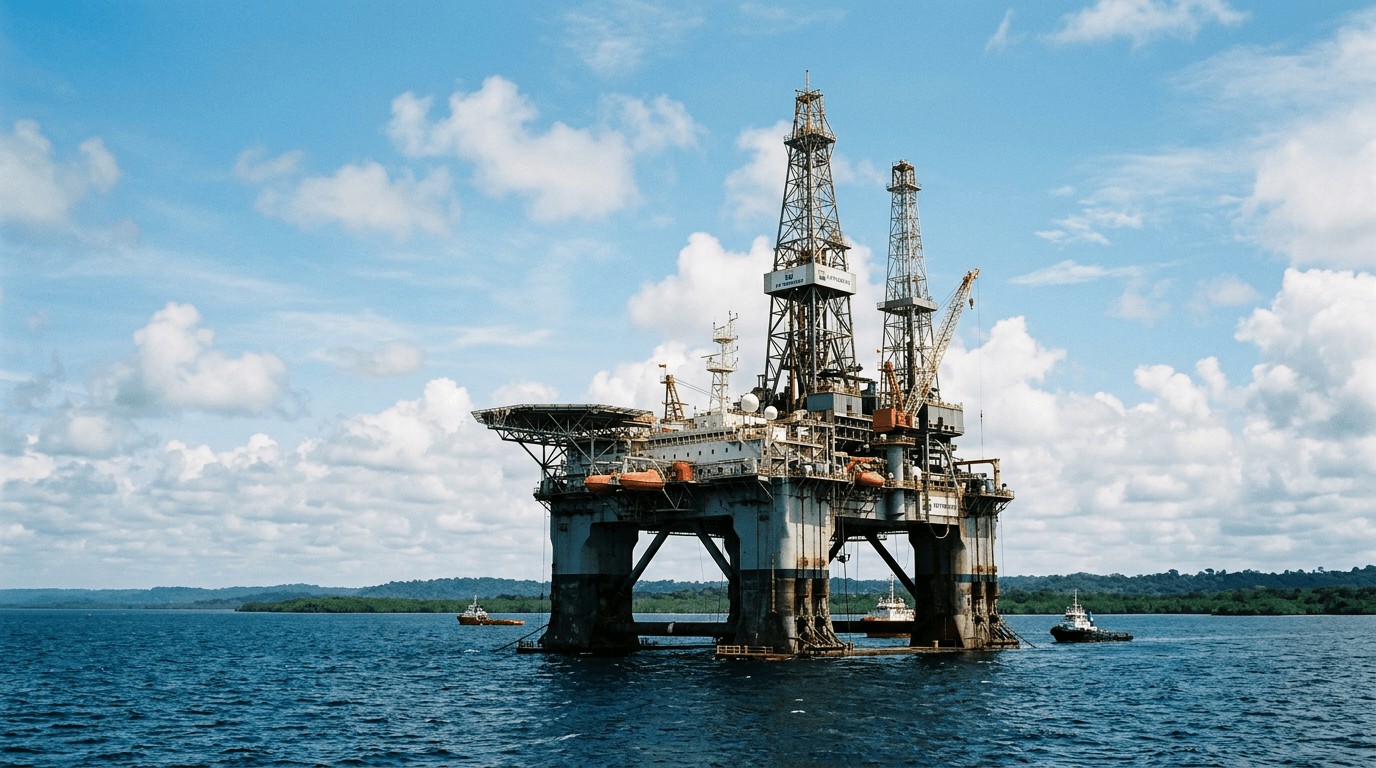
The long-term value of Brazil's state-controlled oil giant, Petrobras, is increasingly tied to the politically and environmentally sensitive Foz do Amazonas exploration area, with one bank estimating the development is worth $15.9 billion. A recent report from Scotiabank analysts Jorge Gabrich and Pedro Nascimento concluded that successful development of the region's northwest portion alone has a Net Present Value (NPV) of $15.9 billion, a value that could add approximately 14% to Petrobras's current valuation, or R$ 6.65 per share. The report emphasizes that for Petrobras, decisions about the Foz do Amazonas are strategically more critical than election results, as the area is vital for maintaining the company's production levels in the next decade.
This massive potential comes into sharp focus following the recent decision by Brazil’s environmental regulator, the Brazilian Institute of the Environment and Renewable Natural Resources (IBAMA), to authorize Petrobras to drill three new exploratory wells in the FZA-M-59 block. The regulator’s approval, granted under strict environmental conditions, allows the company to test the potential of the Equatorial Margin, a new oil frontier stretching from the coast of Amapá to Rio Grande do Norte. Petrobras needs to find new reserves in this area to replace output from its highly successful pre-salt fields, which the company expects will begin their relevant decline after 2032.
The sheer scale of the investment and potential output underscores the project’s strategic importance for the country's energy future. Scotiabank estimates that the full development of the northwest portion of the Foz do Amazonas basin would require around $36 billion in investments over a decade, with an estimated peak spending of $4 billion annually around 2034. The bank projects that this section of the basin could potentially yield a cumulative 4.73 billion barrels of oil over the life of the project, reaching a peak production of nearly 842,000 barrels per day by 2038. To put that number into perspective for a foreign reader, that peak production estimate is comparable to the output from Petrobras's largest current pre-salt fields, Tupi and Búzios.
However, the pursuit of this massive asset carries substantial environmental and political risks. The Foz do Amazonas basin is located near the Amazon estuary, a region of high biodiversity that contains the world's largest continuous strip of mangroves and is home to the Great Amazon Reef System. This proximity to a highly sensitive ecosystem has drawn fierce opposition from environmental groups, who warn of the high risk of contamination from oil spills and chemical pollution. Critics like Greenpeace argue that opening a new oil frontier in this region contradicts Brazil's international commitments to addressing the climate crisis.
Petrobras must submit an updated drilling schedule within 30 days of the IBAMA authorization, outlining its plan for the newly approved Manga, PAD Morpho, and Crotalus wells. The crucial next steps will be the company’s ability to meet the strict conditions imposed by IBAMA—including monitoring requirements and prohibiting the at-sea disposal of drill cuttings from the main oil reserve phase—while navigating the inevitable political and judicial challenges from environmental and Indigenous advocacy groups that remain focused on revoking the drilling license.
What it touches The long-term asset valuation described in the Scotiabank report has a direct effect on the outlook for Petrobras (PETR4), whose common shares traded today at R$ 48.39, up 0.62%. The exposure is to an asset that promises to sustain the company's production decades into the future, but whose success depends entirely on navigating a politically charged and highly complex environmental licensing process.