
Brazil’s ANEEL Launches R$12.9 Billion Transmission Auction, Introducing Grid-Scale Battery Storage
Brazil’s electric energy regulator opened consultation for a R$12.9 billion auction, including the first contract for battery energy storage in the National Interconnected System.
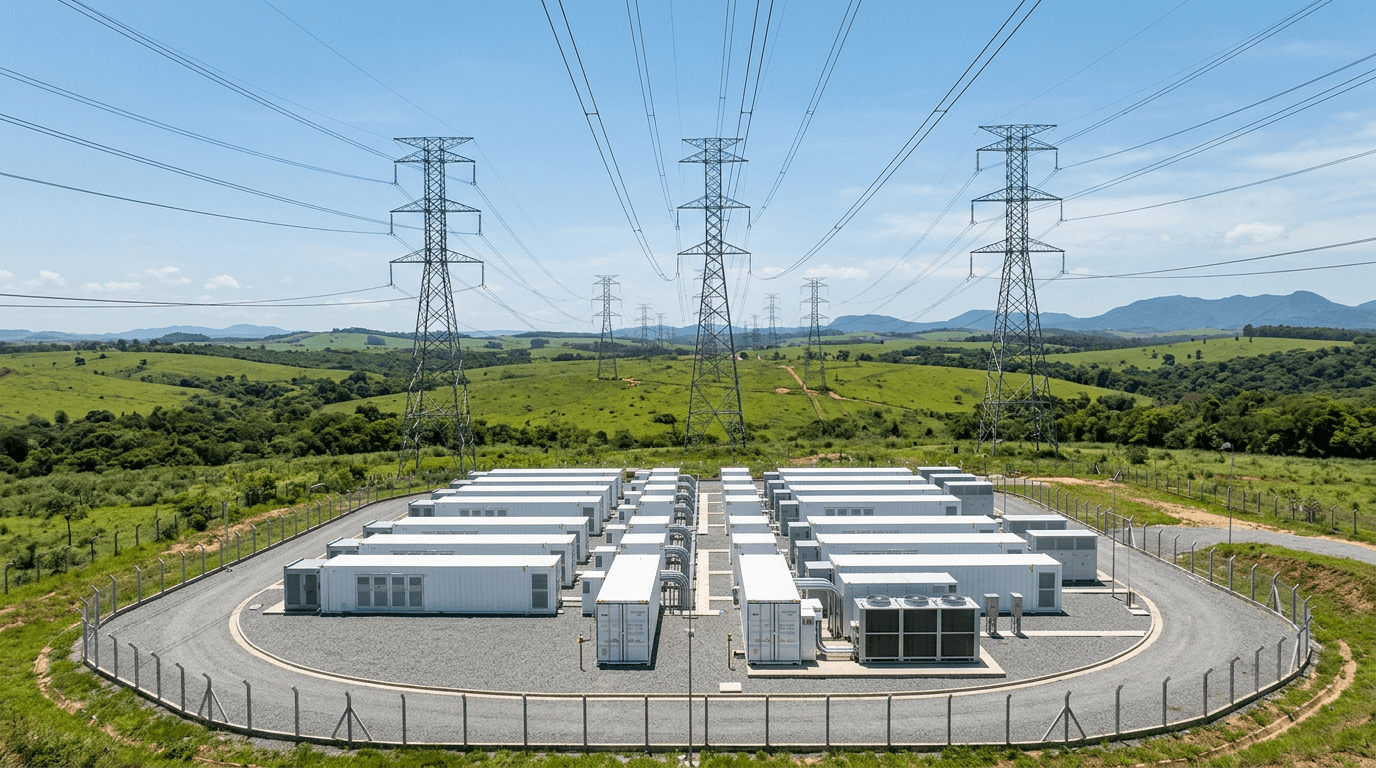
Brazil’s National Electric Energy Agency (ANEEL) has initiated a public consultation for its largest power transmission auction of 2027, which forecasts R$12.9 billion (approximately $2.53 billion USD) in new infrastructure investment and, for the first time, includes a dedicated lot for grid-scale battery storage. The auction, scheduled for April 30, 2027, marks a significant step in modernizing the country’s vast electric grid by integrating new technology to improve reliability and better manage a growing mix of renewable energy sources.
The auction, officially known as Transmission Auction No. 01/2027, aims to contract the construction of 3,245 kilometers of new transmission lines across 13 Brazilian states, alongside new transformation capacity. ANEEL, the federal regulator responsible for regulating Brazil’s electric sector, estimates the projects will generate 29.5 thousand new direct and indirect jobs in the construction and operation phases. The bulk of the investment targets necessary upgrades to the National Interconnected System (SIN), the centralized backbone that connects nearly 99% of all electricity generation and consumption across the continental-sized country, ensuring power generated in one region can be routed to meet demand in another.
The key innovation in this auction is Lot 5, the first contract to explicitly tender for an energy storage system (ESS) via batteries directly into the SIN’s transmission segment. This pioneering project, with an estimated investment of R$249 million, is targeted for the remote western Acre state, specifically to reinforce power supply reliability in the Cruzeiro do Sul and Feijó regions. The use of grid batteries in this context is intended to provide rapid, on-demand stability and could potentially replace the need for less flexible, higher-cost thermal power plants currently serving the area.
The shift to new technology is reflected in the contract terms: while the standard concession period for transmission line lots is 30 years, the contract for the battery storage lot is set for 18 years. This shorter duration was determined by ANEEL to account for the typical operational life and rapid technological evolution cycle of large-scale lithium-ion battery systems, positioning the country to adapt new technology as it becomes available. The public consultation, which opened this week, allows companies and civil society to submit suggestions on the draft of the edict before the final terms are sent for review by the Federal Court of Accounts (TCU) later this year.
What it touches The regulated power transmission sector is a core area for global infrastructure funds and energy developers in Brazil. This auction offers direct investment opportunities across 12 lots, with a concession model that provides long-term, inflation-adjusted, and regulated annual revenues, known as the Annual Permitted Revenue (RAP). The inclusion of an energy storage lot expands the market for international technology providers and project developers specializing in battery systems.